Fraud and Catfishing: How to Protect Yourself with Widowhood Real Talk Podcast Host Dr. Tina Fornwald
Widows and Widowers are often targeted by catfishing scams due to the misconception that they’re sitting on large amounts of money. In reality, many have already drained their savings covering medical and funeral expenses.
In this conversation, Tina Fornwald, host of Widowhood Real Talk, and I (AJ Coleman) dive into practical steps you can take to protect yourself from online scams- especially in the world of dating apps and social media. We highlight the red flags of fraud, the most common tactics that scammers use and how to report catfishing if it happens to you. Most importantly, we talk about why there’s no shame in being a victim and why listening to your instincts is one of the strongest tools you have.

About Widowhood Real Talk Podcast
Widowhood Real Talk With Dr. Tina #WRTWT is a Registered 501(c)3 organization that creates a safe space for candid discussions on the grief journey through our weekly podcast and daily social content. We also connect the widowhood community with an extensive range of professionals, materials, and support groups to foster encouragement, healing, and hope. We are on this grief journey with you to help develop a fantastic life you love and not just exist.
You can find additional resources at the end of the interview for how to report online fraud and catfishing.
Listen to the Podcast Episode Here
Avoid Becoming A Catfishing Victim With AJ Coleman
Avoid Becoming A Catfishing Victim With AJ Coleman
Widowhood, dating online come with challenges. Do you know the warning signs? Do you know the preventive measures that you should have before dating? Do you know what catfishing is? If you’re interested in this, which I know you are, you want to pay attention to this next episode. AJ, who is a professional in this arena, has tips that you want to hear. Let’s get into this conversation now.
AJ, welcome to the show.
How are you?
I’m feeling good, how about you?
I’m always well, thank you for asking. I’m excited to be here.
Thank you. When you hear welcome to the Widowhood, what was the ticker-tick in your mind, like what popped up first?
When you see the words come across, there is no distinction between widows versus widowhood. I think about it more, so is it really where can I help? What can I do? That’s usually my first thought is I don’t look at stereotypes. I don’t look at other labels or anything like that. My focus is on how can I help and how can I help our readers to get where they want to go and grow.
The Danger Of Catfishing
That’s fair. It’s interesting that it goes in line with what we’re going to talk about, which is the catfishing, identity fraud, and things of that nature. A lot of people in the widowhood community, male or female, are very vulnerable. You and I both know that this is a conversation worth having. You said in our pre-conversation, even more so coming up next to tax season, and people maybe having a little extra money and feeling a little generous, and making sure that they’re not being duped. I’m excited to have this conversation.
Me too. Talking about fraud is near and dear to my heart. I’ve been in the fraud business, more so in detection, not committing fraud for 24 years.
Thank you for making that distinction.
It’s definitely a unique career field. I enjoy what I do. I’m very passionate about what I do but I also understand there are a lot of people out there that are really skilled at what they do. They just may not have the proper tools to combat fraud. That’s where we come in. It’s interesting when you talk about catfishing, people think immediately it’s about phishing.
You think about you’re going to a stream and you’re throwing out the rod, but in the fraud world, it’s basically a scheme or a scam when someone creates a fake identity on a social media or a dating platform and really pretends to be somebody else with the ability to deceive. As widows, widowers, a lot of times they get caught up in the catfishing because they’re looking for companionship, support.
There is just this notion out there that when widows and widowers first become, they have all this amount of wealth coming through. That’s not the case. Most of the time, it’s used to pay for funeral expenses, sadly, maybe hospital bills or other medical bills, but it also may be used for proactive measures of counseling. It’s not like we inherit this great windfall of money. Unfortunately, as the widower, as widows, we become ripe, we become victimized into this catfishing scheme.
Thank you for explaining that. For someone that’s not familiar, the idea, “Why would somebody want to catfish me? I’m not important. I don’t have a lot. I really shouldn’t have to worry about that.” What would you say to that type of response?
It happens to everybody. Different names, different races, different statuses, social, and financial. It can happen to any. A lot of times, these fraudsters or these individuals that victimize their people will take the time to build up this storyline to get to know you. They don’t really know in the end what you have financially. They don’t know what you have in terms of the capacity to recognize that maybe the who you’re talking to isn’t who they say they are. It’s unfortunate that there are people out there, but it is a large industry. A lot of people out there that just real people in. It’s really unfortunate because when people get victimized, they lose their life savings.
They become embarrassed. Now it brings whole new psychological disadvantages because now they’re ashamed, and I’m not a licensed clinician or a doctor, but in some cases, it may lead to suicidal thoughts because of the embarrassment. That’s very scary. As we get closer to not only the tax season and getting refunds, which hopefully everybody is getting. We need to be careful about who we are communicating. What are some of the warning signs that are out there? How do we detect it, and what do we do to prevent it? A lot of what we do is education, and that’s important.
Warning Signs Of Catfishing
Thank you. You actually led into what I was interested in. Dating online is very normal. Connecting with people on social media platforms, chatting with people, especially because the algorithm has a way of bringing people to you that have similar interests. I’m on my favorite social media platform, I’m liking somebody’s content, and then I may message them and just say hello because they’re sharing something of interest. What are some things that would stand out to you based on your background that this may not be a safe conversation or safe space for me to be in?
The world of dating is changed over the years, especially with apps, and depending on who you talk to, it can be a lot of fun. The idea and the thrill of meeting new people who are genuine. In some cases, you do meet people who are not who they say they are. Like anything, if it’s moving too fast, meaning they want to pressure you into providing them with their life story and telling them how you can help them overcome certain things. Most people, when they’re dating, it’s very natural. They’re learning about their likes, their interests, and that’s very similar to what the catfishing do.
They do the same type of question. Their goal is to build up trust and comfort because, at a later time, once everything is going well, that’s when they start coming in with different stories. “I’m sorry, I have to put my dog down. I need $5,000. I cannot pay the vet bill. Can you help me out? My child is stuck in another country, and I need to find an attorney.” My favorite of all time, and this is an interesting one, is that there was an individual, unfortunately, that was catfished, and they needed to withdraw cash and pay the doctor in cash in Panama and the cash needed to be sent via UPS down to Panama so the doctor can perform an operation.
By the way, what we had learned through our investigation, the patient was in a coma. When I asked the victim, I said, “How were you contacted?” He said his granddaughter called him and told him that she was in a coma and that they needed to pay $25,000 in cash for the hospitalization. When you’re in a relationship and when you’re in a certain scheme, a lot of times logic and reasoning go out the window because you’re not thinking about it.
You’re thinking about “How can I help somebody, or I have a loved one that I care for, what can I do?” That’s where these scams develop. What happened in the end with that particular case, we were able to convince the victim that his daughter was not in a coma. That’s when you’re in a coma, you’re not calling to talk. You’re in a coma. Jokingly, I said, “The doctor’s only going to take cash because he doesn’t want to report the income for tax purposes. Down in Panama, this is probably not the doctor that you want to be involved in the medical treatment.
What we learned from this expense, and this is all part of the catfishing, it could be dating, it could be different types of scam, whether it’s grandchild, grandparent, it could be family members, it could be unknown individuals online that you think you’re talking to a banker and it’s not who they are. The key is to recognize the warning signs. Think about dating as we know. It’s natural. You’re excited about meeting the person. “It’s been a while since I dated, so I cannot tell, but I’m sure there’s some FaceTiming going on. There are some videos.”
It feels natural, but when somebody is hiding and they don’t want to show their face, that’s a warning sign. They’re sending you photos of themselves and maybe in moments of action, whether they’re at the beach, they’re shopping, or sitting outside a coffee shop, but they’re not willing to go on the phone and FaceTime you. That’s definitely a warning sign.
As we get deeper into our conversation and we talk about preventive measures and detection, I will give some really good tips on how you can use your own computer and look at some of the images that you’ve been receiving to determine if it is who they say they are or if it’s a recycled image that maybe you use as part of a scam. That’s a lot of details.

Experiencing Shame After Being Catfished
We want them all. You mentioned earlier about people feeling ashamed that once they’ve been catfished and not wanting to talk about it or share that. Why should they overcome that being ashamed and tell somebody what’s happened to them?
We look at social media as our presence. Sadly, sometimes the stories that we see on social media aren’t really what’s happening in real life, where people are posting certain images, certain lifestyles, and are portraying themselves in a particular live event. In our situation, when it comes to that catfishing, when you look at the media and performances, people just have to get over the fact that they’re vulnerable. When you become ashamed, it’s okay to say, “I made a mistake.”
It’s okay to forgive yourself. That is the number one key anytime any of us makes a mistake. It’s amazing how often we remember ten bad things that went against us, but we struggle to remember ten good things. It’s because our minds are shaped and formed to remembering the negativity, the shame. Forgive yourself. We all make mistakes.
If we fall for a particular fraud scheme, again, sometimes you just don’t have enough knowledge or education to understand what that scheme is, and you become victimized. It happens. Many other people are in the same position as you, but hiding from it, not talking about it. It does prolong when we talk about grief, because it is a form of grief. Shame, becoming victimized, you’re upset about what’s happened. It lingers in your mind.
If you were one of those individuals that provided large sums of money, that’s a whole different dynamic of a discussion of shame. What I like to do is let’s break it down into small details. Did you provide any financial resources to the individual? What was the purpose? Does it make sense to you? If you did, that’s okay. You acted on what the information you got, and you felt empowered enough to move forward and release the funds. The beauty is that it’s a one-time thing, maybe a couple of times, you have the ability to stop it by not allowing it to continue.
How Catfishing Changed The Dating Scene
Do you find that men or women have a higher percentage of being catfished?
It’s both. In today’s dating world, anything can happen. Unfortunately, some of the profiles that we are swiping to either like or when I am interested, some of those profiles may not be who they say they are. What’s happening here, and I think I saw the statistics somewhere, is that if you have a social media platform like Facebook, Instagram, TikTok, your likelihood of becoming victimized from identity theft or other fraud schemes is well over 40% because these fraudsters.
What they do is they hone their craft in building up a case and identity of who their victims are. We’re human. We like to post everything and anything. I’m at this restaurant here. My child did this. My dog rolled over or something like that. All these great things that you’re looking for to share with a woman are fuzzy. The fraudsters are looking at this and say, “How can we build an identity case with this person?”
When they come into the catfishing scheme, they’re acting with similar interests that you may have because they’re following what you’ve posted and what you’ve shared. Nothing is ever truly deleted that you post on social media. You can remove certain things from a timeline or photo, but chances are somebody may have captured it or, in some extreme cases, have downloaded the data with that information to be used at a later time.
They are literally profiling, watching the person before they engage. It’s not like just all of a sudden. Have you been able to track, like, how long someone is researching profiles on someone before they engage?”
There’s no blueprint in terms of how long does it takes. It depends on if I go on to somebody’s social media page and does a lot of posting on Facebook, Instagram, or TikTok. It doesn’t take me long to figure out their life story, where they went to high school, who some of their friends are, and what their interests are. Perhaps if there is a loss of a spouse or a loved one, they’re taking note of that.
They’re looking at that as an opportunity to gain your trust and leverage that against you. It doesn’t take long. Sadly, if I were to pick some random profile on Facebook, somebody I don’t know, and if they’re a regular poster, I can pretty much gather their entire life story within the hour and start building a profile on a dating app or a social media that mimics some of their interests, some of their thought to bring them in. A lot of times, what we do is the art of storytelling and how we introduce ourselves to people.
We open up that information to everybody. I can come and say, “I’ve noticed we share the same interests. You lost a spouse, I lost a spouse. I’d like to learn a little bit more about your coping and how did you overcame to a victim.” It seems very genuine. They don’t realize that there may be another motive behind that introduction. They’ll look at the profile photos, they’ll look at some of the information, and they’d be like, “This person looks genuine. They really seem to care. I want to talk to that person.” That’s how it really begins is that first storyline buildup.
How To Avoid Catfishing Schemes
I hear that makes me like want to just shut down all the social media, just shut it all down, but that’s not realistic for me and maybe not for other people. What are some ways to identify this or to prevent yourself from being taken advantage of like this?
There some several different things where I call warning signs. If something is too good to be true, it usually is. I know that’s hard because emotions are involved and we have high hopes for somebody that we’ve met, and we see these possibilities of what they may become and how do we fulfill our companionship with that person. If it’s too over the top, the over-complimenting, the too much involved in telling you all the things that you want to hear.
That may be a sign over flattery. Remember, dating should feel natural. There is no way that we’re getting complimented every single day, all the time. Other areas are right, sometimes the refusal to meet. After a couple of weeks, sometimes people build a rapport with each other and that trust and say, “Let’s meet.” Whether it’s for a drink, whether it’s for coffee, or whether it’s a walk in the park. If you are a fraudster that’s chasing down its victim, you’re going to use a lot of different excuses to why you cannot meet.
“I’m not feeling well, or I’ve had a work emergency. My cat ran up the tree or something.” When it becomes a pattern of their refusal of meeting with you, that is definitely a warning sign. The other part is inconsistent information. Dating is just collecting information all day. You’re deciding whether you like what you hear, what you don’t like, can you live with that? You’re trying to use that notion. I think it was like 80% of the person that you have to like and let go of the other twenty or something to that caliber.
If you start coming up and finding that there’s just too much information that’s inconsistent, where they say, “I no longer have a relationship with my father.” All of a sudden, one day it’s like, “I just saw my father yesterday.” You have to keep your radar open. Obviously, requests for money are the number one red flag. Most dating relationships, unless you are involved and you’re living together, you’re not requesting money.
This is not like, “Let’s go out for dinner and I’ll pick up the $200 tag.” No, this is something that is much larger. “I need $5,000 for an operation. I need this. I need that. Can you provide this to me? I will pay you back.” Once the conversation turns to money or monetary, definitely a red flag. Now it may be legitimate. It may be genuine, but usually in terms of catfishing, monetary discussion, and red flags. The other part where this is where I would love to leave a tip for your reader is if they’re sending you unusual or hard-to-verify photos.
Now, a lot of times we get photos through email, direct messages, text messages, but some of these photos, either they look almost too perfect, or this is something that doesn’t make sense. There is a website that is out there that I believe started maybe 16 or 17 years ago called TinEye. What this is, it’s like a reverse image type search where you can basically take the image that you receive and put it into this database. It will almost instantaneously, maybe a few minutes, look at all this algorithm to see if that same photo is being used anywhere on the internet.
Get out of here.
It may not be 100% perfect, but it gives you food for thought. A lot of times, catfishing individuals, when they look at their victim, they’re recycling the same photo, the same story. Chances are, your photo is out there, it will provide some information, and you can ask a better clarifying question. If it doesn’t make sense to you, trust your gut and ask. Because of the emotional human element that we have in dating, we almost don’t want to believe something. That’s why they say love is blind.
I can relate to that. When I started dating, I tried to put some precautions in place because this was uncharted territory, and afraid of being vulnerable. Tell me what you think of the things that I did. One, I never used my real phone number. I used a DVA phone number like Google Voice or something like that. I didn’t put everything on my profile because I felt that people would try to create this persona based on what I listed there. The third thing, I’m 1 of 5 siblings, and I allowed two of my sisters to be actively involved in me looking at different profiles, getting their input.

There were a couple of people that, early on, we were talking and then supposedly it was a business person. He was out of the country. He needed money from New York, and he couldn’t get to it, but supposedly his daughter was there and his business partner. When you talk about things not lining up. I was like, “I need some money too.” I started asking him for some money, and he didn’t talk to me. Those are some things that I did. Having my sisters involved in the dating app. Would those be helpful or other different things that you would recommend for people in this dating act climate?
Absolutely. You were fortunate to have the sisters to confide with that you trusted for their honest assessment. Is this person too good to be true? A lot of people, unfortunately, don’t have that. They have to feel around themselves. You may have a close friend. You may have somebody that you trust to give you their perception. That’s great. Again, sometimes that doesn’t always work because maybe they get interested and say, “Wait a minute, why are you going to, I want that person. That guy seems amazing. I want to try to do that too.”
Dating is just so challenging today than ever before. The way you went about looking and be selective on what you put up, that’s you taking a step back and saying, “I want to protect myself.” Those are preventive tips that you put in place without even realizing that you’re not giving everything and everything to the fund. A lot of people, when they are on social media, they tell their entire life story. That is ripe to become victimized at a later time.
When we lose our jobs, when we lose a pet or a loved one, or we just have a terrible day and we post about it and you say you’re struggling, it’s giving somebody else an opportunity to swoop in and try to fix and address it and use the emotions that you’re going through against you. I love what you’ve done. You trusted your sisters, you had it from a different perspective. I know how difficult that is because you may have had discussions where they were like, “It looks a little off.” You’re like, “No.”
If they said it, my block game was strong because I had been married with my late husband. We’d been together 32 years. I had no idea how to navigate dating in this climate. My sisters had been dating, so I trust them. What they were saying, I was like, “Bye with that. I don’t need any of that.” Those were my top three preventive measures. What are some other preventive measures that you would recommend?
I love the fact that you don’t put your entire story out there. Don’t list every instance. Maybe it’s the top few that are near and dear to you. You don’t want to give somebody the opportunity to make a decision of who you are without meeting them. That’s the whole point of dating. You get together, you meet, you learn about it, it’s like an interview. That’s more of a comfort. When you rush into it and you put everything and anything out there, that gives that opportunity for somebody to say, “This looks like the right person.”
If they find out, unfortunately, that you have been widowed, you are a widower, there’s a whole different perception that goes through their mind to say, “We may have found what the term is a whale.” Somebody who probably inherited a lot of money at some point through their loss. What they’re going to then start doing is building up that relationship with you, and claim most of these catfishing scams, you may hear that they have lost a spouse or somebody really near and dear to them because they’re looking to leverage that connection with you.
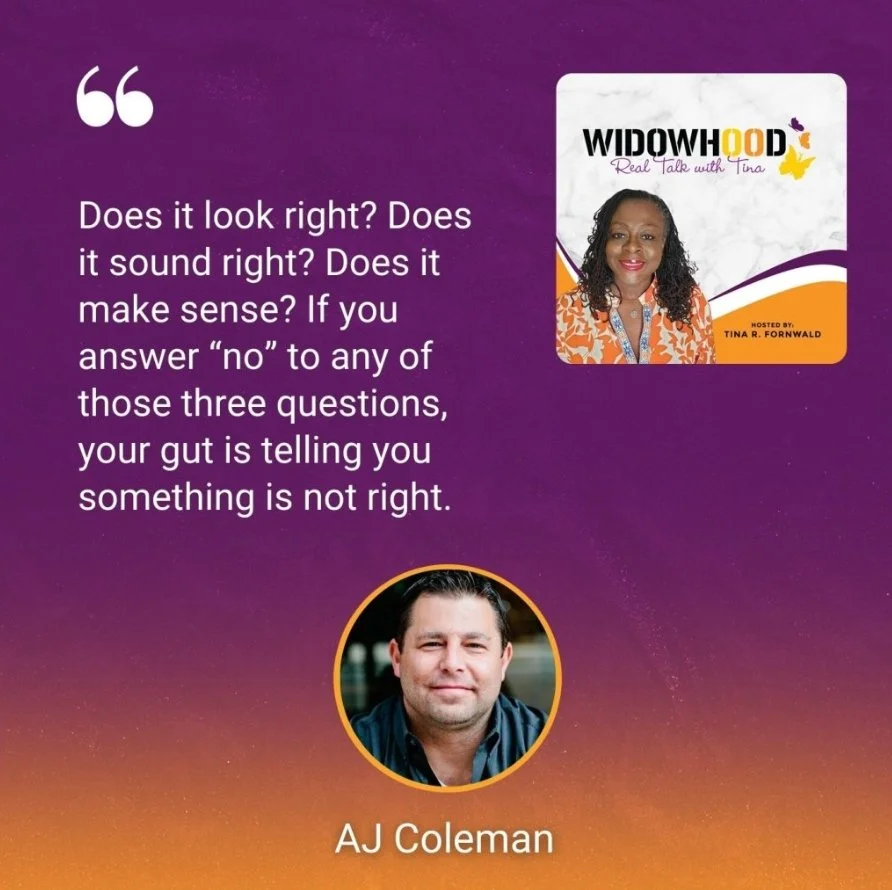
Once that trust is formed and there’s credibility, that’s when they start asking for the money, the financial part. Today, because dating is so tough, they don’t want to spend months and months trying to build up a rapport with somebody. It usually takes anywhere from a couple of days to maybe even a few weeks, and maybe even a month or two before they start coming through. If something feels off, this is the best preventive measure that you can take. It usually is. Listen to your gut. I have a saying that I ask myself in the fraud world on any transaction I look at, any fraud scheme.
AJ’s Strange Dating Experience
Does it look right? Does it sound right? Does it make sense? If any of those three questions, the answer is no, I’m not sure, then you’re onto something. Your gut is telling you something is not right. That is the best preventive. Educate yourself, learning more about the dating perils out there, and listening to podcasts. Some people have some humorous stories about dating. I have some myself when I was dating, that I didn’t even understand what I was doing, but my radar went on.
You got to share one of these stories. You cannot just say that and not share it, AJ.
When I became a widower, I was 33 years old, and I was very engaged with my daughter at the park, and that type of dad I am. She is my everything. I was engaged, and kids are great when they parallel play with each other, they meet each other on the playground, they talk, they role-play, they fantasize, doing things. My daughter had met and befriended this one gal and was talking to the mom, and the mom at the end said, “Can we exchange numbers? Let’s get together.” I did. Again, my radar thinking genuine.
I don’t know what her motive is. I’m thinking the daughters had a good time playing with mail. Maybe we can arrange another time. A couple of days later, she texts me and says, “What are you doing Saturday night?” I texted her back and said, “My daughter and I are available. What do you got in mind?” She says in a return response, “Maybe we can leave the kids home and you and I go out.” That’s when I was like, “Huh?” I called her. Instead of going by these text messaging, I called her. She’s like, “AJ, why are you calling me? Just text me.”
I said, “I’m sorry. I haven’t dated prior to before cell phones having text messaging. I cannot read between the lines.” My radar went off immediately and said, “What was this woman’s motive? She knew I was a widower. She knew I had a single daughter. She’d met my daughter. Is there something?” I deleted her phone number from and we never saw or heard from the individual again.
When it comes to that, again, it’s the emotions. I was excited at first because as your children play and with others, you’re like, anytime when you’re dating and you bring kids into the element, it’s like a whole other ball game too. If you see the kids are getting along right away, and you’re like, “Great. We now have an opportunity maybe, to knock down that one barrier.” It was a very strange return of messages.
It was my first inclination to realize that now I don’t think she was catfishing me per se. I think she had some different motives, but in my gut, something just didn’t sit right. You wanted me to change numbers. Maybe in the future, arrangements with the kids. Now you’re asking me the first point, or maybe just leave the kids home.
It really wasn’t about the children at all.
I don’t believe so. Let’s be honest, when you’re a single parent, you go out and have a great evening. You come home, what’s the next thing you got to do? You’ve got to pay the babysitter. It is not easy. Again, I also could become victimized as well, but recognizing these warning signs, trusting your gut makes all the difference in the world. Now, somebody may come and say, “AJ, what if you missed out on an opportunity?”
Use The Available Information To Your Advantage
It wasn’t the right opportunity. Dating should not be difficult. It should be natural. It should flow. You have to work at it, but in theory, it should be fun, engaging. Sadly, there are people that have different motives on what they’re looking to do. Another really interesting preventive measure that I haven’t spoken about is the beauty of social media is information is everywhere. If somebody’s sending you photos, start playing around on the internet, in the dating app or maybe even through Facebook, and see if those same photos are being shared with a different profile.
In some cases, some of those photos are actually recycled between multiple people, and it might be in different cities, different countries. They’re hedging on the fact that you’re not going to do your research and find them. If you’re into detective-type movies or crime scene-type things, you got to put your hat on and say, “Is this person genuine?” I hope that at the end of our discussion, people are going to be so afraid to date. That’s not what we’re here for.
We’re here to help educate and arm people with information that they can use to at least better protect themselves, but ask better questions. In a situation where if you see that same photo on somebody else’s profile, it is okay to ask that individual, “Why is it on another profile? Walk me through this.” What mostly will happen is you’ll get some far-fetched excuse, which is filled with inconsistencies, or they’re going to completely ghost you because they know they’ve been caught.
Going back to the question you asked earlier, is when you’re ashamed or disappointed like that, recognize you have the opportunity to forgive yourself. It wasn’t your fault. You were able to recognize it at a later time and stop it from becoming much granular. Now, there are people who are more activists that may go out there and try to exploit that particular profile or individual.
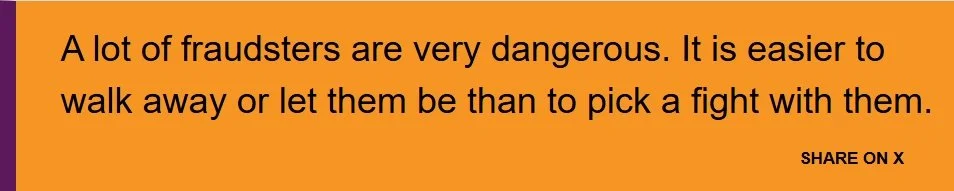
My recommendation is don’t. There are a lot of people, especially in the fraud world, that are very dangerous. It’s easier to just walk away or let them walk away than it is to pick a fight. From a safety standpoint, how you heal from a catfishing scheme is knowing that you took the proper steps to move on.
Introducing Yourself As A Widow/er
That’s a lot. Two more questions I have. This is a question that comes up very often. When you are a widower, that is part of your story. When people are divorced, they get to easily talk about that, but there is a concern of someone thinking you have means when you are a widow and whatever. Is there a recommendation of when I should talk about those things in this organic relationship before trying to find out if this person is genuine?
Whatever helps you sleep better at night. That is the best answer I can give. We connect with different people every day. Sometimes we connect instantly, where you’ll feel comfortable sharing certain information. Sometimes, maybe a little bit more reserved by not sharing that, I lost a spouse or I lost a loved one. You have to get a feel, trust your gut, trust your instinct, but also recognize when it doesn’t feel right is not right and stop it right then and there.
If you’re unsure and you’re conflicted exactly what you did, confide with a family member that you trust, a close friend, and say, “I’m getting a lot of mixed signals here.” That will help diffuse some of that “What do I share? How often do I share it?” There are some people when they become widows or widowers, the next week, they’re looking for companionship.
That’s okay. We watch too many movies in our lifetime that state you should never do that. You need X amount of time to grieve, but it’s really about closure and how do you move on. There is no blueprint of what you should say, what you shouldn’t say. It’s whatever feels natural. That’s the beauty of dating. That’s why two people who are unique can bind with each other. They learn to trust each other. Most relationships out there are really legitimate, and they’re not fraud driven.
By being educated and armed with knowledge, you can just have your little radar on and say, “This looks a little weird. I’m not going to disclose that I’m a widow or widower yet. I want us to see where this is going before I indulge in my personal life.” Again, whatever helps you sleep better at night, knowing that you’re doing all the things to help you not only grieve, but also cope and eventually move on. That’s the most important.

How to Report Catfishing
To report catfishing, immediately stop contact, block the user, and report the profile to the platform (social media/dating app). It helps to document as much evidence as possible of online interactions and bank transactions. In the event that money was sent or personal information was shared, file a complaint with the FBI Internet Crim Complaint Center (IC3) and the Federal Trade Commission (FTC).
About Dr. Tina Fornwald
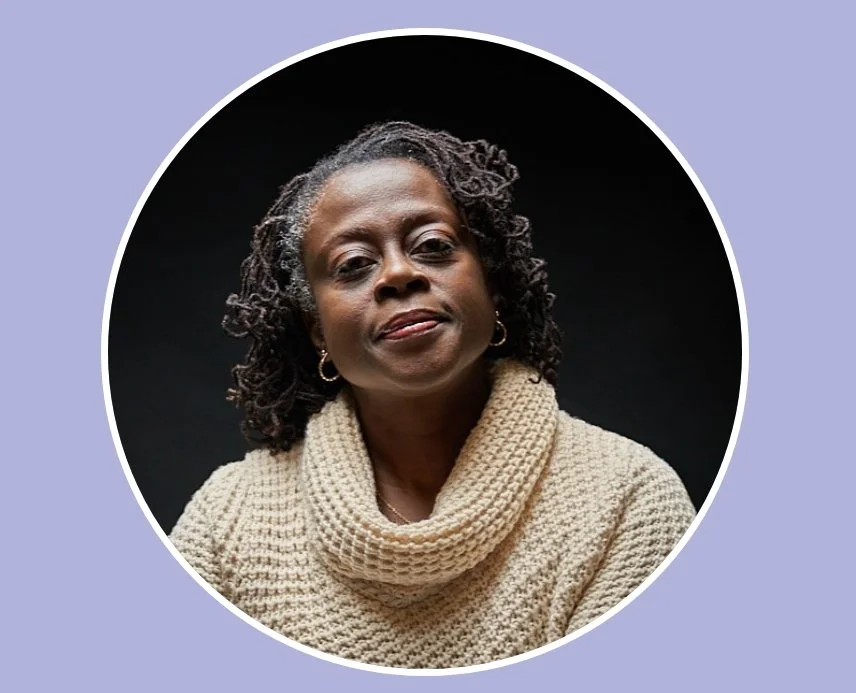
With 21 years of experience as a military officer, Tina Fornwald is an author, speaker, grief advocate and host of the Widowhood Real Talk Podcast. Tina was born and raised in Chicago, Illinois. After graduating high school, she enlisted in the United States Army and Retired in 2020 as Chief Warrant Officer Two. While in the army, she pursued higher education, earning a bachelor’s degree in Finance with a minor in Accounting. Tina was ordained into the ministry in August 2010 and provides Empowerment Life Coaching. Tina’s mission is to help people honor grief and rediscover a sense of belonging.